
Services
Dentures
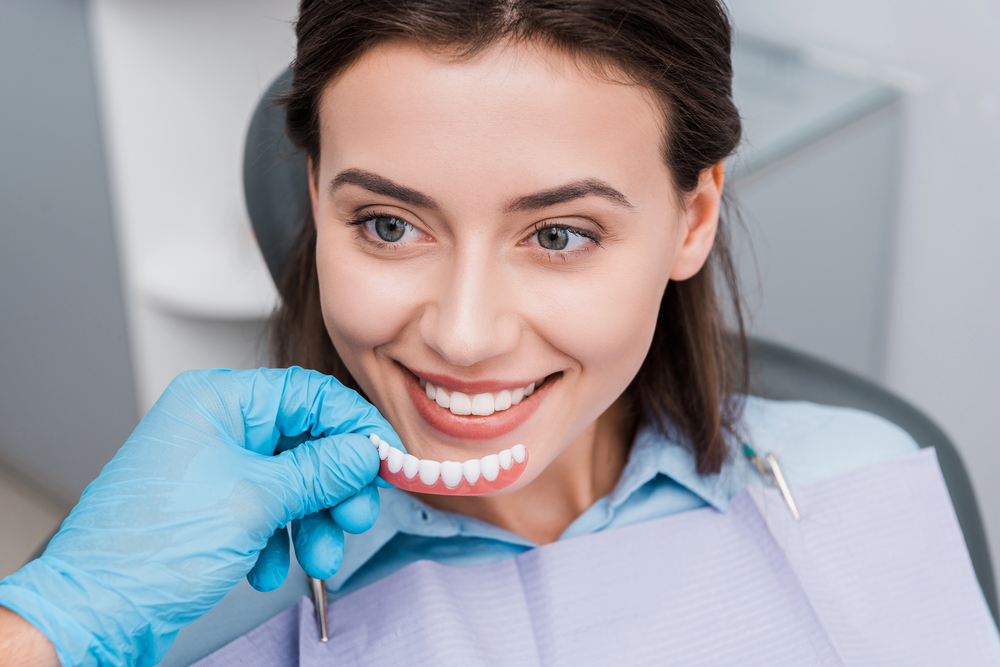
Our complete dentures replace a full arch, while partial dentures fill gaps among your remaining natural teeth.

Why choose us
Benefits of Dentures
Complete or Partial Options
We offer complete dentures to replace a full arch of teeth and partial dentures to fill gaps when some natural teeth remain.
Eat and Speak Comfortably
Replacing missing teeth can make everyday chewing and speaking feel more natural again.
Restore Your Smile
Our dentures are designed to fill out your smile and support the natural shape of your face.
Protect Remaining Teeth
A partial denture fills open spaces so your natural teeth are less likely to drift out of place.
Flexible Ways to Pay
We accept many major insurance plans and self-pay patients, and we offer financing through Sunbit and CareCredit.
Missing teeth affect much more than appearance. They can change how you chew, how clearly you speak, and how the rest of your teeth hold their positions over time. Dentures are one of the most established ways to restore what's missing. At Anytime Dental – San Tan Valley, we offer both complete and partial dentures, so we can match the approach to the teeth you have and the ones you've lost.
A complete denture replaces an entire arch of teeth, upper, lower, or both. It suits patients who have lost all their natural teeth in an arch, or whose remaining teeth can't be saved and need to be removed. The denture rests on the gums and restores a full row of teeth, which also brings back support for the lips and cheeks.
A partial denture fills gaps when some healthy natural teeth remain. Rather than replacing everything, it fits around your existing teeth and fills in the spaces between them. The main difference comes down to how many teeth you still have and whether they're healthy enough to keep. When natural teeth can be preserved, a partial is often the more conservative choice. When an arch has few or no reliable teeth left, a complete denture usually makes more sense. We look at your mouth as a whole before recommending either one.
Patients come to us for dentures for many reasons. Some have lost teeth gradually over the years to decay or gum problems and are tired of working around the gaps when they eat. Others are facing the removal of several failing teeth at once and want a plan for what comes next. Our office performs both simple and surgical extractions, so these steps can be coordinated within one practice.
Other patients already wear dentures and want a fresh look at their options. Some want to replace one or two missing teeth without committing to more involved treatment. Because we also provide dental implants, implant-supported dentures, bridges, and crowns, we can explain how traditional dentures compare with these alternatives. That way you can choose based on your goals, health, and budget.
Am I a good candidate for dentures?
Most people missing several or all of their teeth can be considered for dentures, and an exam is how we confirm it. During your visit, one of our dentists, Dr. Adam Borgia, Dr. Jordan Karren, or Dr. Chris Spurgeon, will evaluate your remaining teeth, your gums, and your overall oral health.
There are a few things worth knowing ahead of time. If some teeth need to come out first, that becomes part of your treatment plan. Dentures also take an adjustment period, since your mouth needs time to get used to them while eating and speaking. If dental visits make you anxious, we offer local anesthesia, nitrous oxide, and IV sedation to help you feel more at ease during procedures such as extractions.
How do I care for my dentures?
Caring for dentures takes daily attention, much like natural teeth. Good habits help them stay clean and comfortable. Our team will walk you through care for your specific appliance, and these everyday practices are a good foundation:
- Rinse your dentures after meals to remove food particles
- Brush them daily with a soft brush made for dentures
- Handle them carefully, ideally over a folded towel or a sink of water, in case they slip
- Keep them stored as directed when you're not wearing them
- If you wear a partial, keep brushing and caring for your natural teeth
Regular checkups matter even if you have no natural teeth left. Your gums and the bone beneath them change over time, which can affect how your dentures fit. Routine exams let us check your oral tissues and catch fit problems early. If something feels loose, sore, or broken, contact us. We offer emergency dental appointments when urgent problems come up.
How can I pay for dentures?
We work with many major dental insurance plans, including Delta Dental, Cigna, MetLife, Blue Cross Blue Shield, Aetna, Humana, Guardian, United Concordia, United Health Care, Principal, GEHA, Beam Dental, and Mutual of Omaha. Coverage for dentures varies from plan to plan, so our team is glad to help you understand your benefits before treatment begins.
If you don't have insurance, we welcome self-pay patients. We also offer financing through Sunbit and CareCredit, which can spread the cost of treatment into more manageable payments.
We proudly serve patients from San Tan Valley, Florence, and Queen Creek, and we'd love to help you explore whether complete or partial dentures are right for you. Call our office or request an appointment, and let's talk about restoring your smile with care that fits your life.
The process
What to expect
- 1
Consultation and Exam
We examine your mouth and talk through whether a complete or partial denture, or an implant-supported option, best fits your needs.
- 2
Fitting Your Dentures
Our team takes careful impressions and adjusts your new dentures for a comfortable, secure fit.
- 3
Aftercare and Adjustments
We see you for follow-up visits to fine-tune the fit and show you how to care for your dentures day to day.
Questions
Dentures FAQs
What is the difference between complete and partial dentures?
Complete dentures replace all of the teeth in your upper or lower arch, while partial dentures fill in the gaps when you still have some healthy natural teeth. Complete dentures are often a good fit if you have lost most or all of your teeth, and partials let you keep the natural teeth you have while restoring your smile and bite. During your exam, our dentists will look at your remaining teeth and gums and help you decide which option makes the most sense for you.
Does insurance cover dentures, and what payment options do you offer?
Many dental plans offer some coverage for dentures, but your benefits depend on your specific plan, so we are happy to check them with you. We accept a range of insurance plans, including Delta Dental, Cigna, MetLife, Blue Cross Blue Shield, Aetna, Humana, Guardian, and others, and we welcome self-pay patients. To help spread out the cost, we also offer financing through Sunbit and CareCredit.
Will getting dentures be painful?
Getting fitted for dentures is not usually painful, though it is normal for new dentures to feel unfamiliar and cause some soreness while your mouth adjusts. If you need any teeth removed first, we use local anesthesia to keep you comfortable, and we also offer nitrous oxide and IV sedation for patients who feel anxious about dental care. Let our team know if anything feels uncomfortable along the way so we can help make your dentures fit better.
How long does it take to get used to new dentures?
Most people need some time to get comfortable eating and speaking with new dentures, and the adjustment period varies from person to person. Partial dentures often feel natural sooner because they are supported by your remaining teeth, while complete dentures can take a bit more practice. Starting with softer foods and wearing your dentures as directed can help you adapt, and we are here to make adjustments if needed.
Are there alternatives to traditional dentures?
Yes, depending on your needs, other tooth replacement options may include bridges, dental implants, implant-supported dentures, or full arch dental implants. Implant-supported dentures attach to implants placed in the jaw, which some patients prefer for added stability compared with traditional dentures. We will talk through the pros and cons of each option with you so you can choose the approach that fits your health, goals, and budget.